
'Any normalisation exercise will bring its share of volatility.'

Do the actual numbers bear out the claims made by the government or do they suggest something else? asks A K Bhattacharya.

The central bank can directly print money and finance the government, but it should avoid doing so unless there is absolutely no alternative, former RBI governor D Subbarao on Wednesday said while pointing out that India is 'nowhere' near such a scenario. In an interview with PTI, Subbarao suggested that to deal with the second wave of COVID-19 induced slowdown in the economy, the government can consider Covid bonds as an option to raise borrowing, not in addition to budgeted borrowing, but as a part of that.

Fitch Ratings on Thursday said the resurgence of COVID-19 infections may delay India's economic recovery, but won't derail it, as it kept the sovereign rating unchanged at 'BBB-' with a negative outlook. It projected a 12.8 per cent recovery in GDP in the fiscal year ending March 2022 (FY22), moderating to 5.8 per cent in FY23, from an estimated contraction of 7.5 per cent in 2020-21. Fitch had in June last year revised outlook for India to 'negative' from 'stable' on grounds that the coronavirus pandemic had significantly weakened the country's growth outlook and exposed the challenges associated with a high public debt burden.
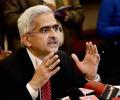
Reserve Bank Governor Shaktikanta Das on Monday said despite the latest headwinds arising from the Jackson Hole summit leading to extreme volatility, our banking system and financial markets are strong enough to withstand such pressures. Taking the markets by surprise, US Fed chair Jerome Powell had told the annual Jackson Hole summit of central bankers and economists last week that he would have to keep raising federal fund rates to tame inflation, which remains the biggest challenge to the world's largest economy. He also warned of the pains that such monetary policy actions would create on growth and jobs.

After selling dollars for the past few months, the Reserve Bank of India (RBI) may take a hands-off approach before its annual account closing by not trying to prop up the rupee as geopolitical tensions show signs of stabilising with global crude oil prices easing from its $140 peak. The central bank was a net buyer of dollars between April and September, and then turned a net seller in the following months, the data released by the RBI showed. The RBI continued to be a net buyer of $36.6 billion in this fiscal year - between April and January. In 2020-21, it purchased $68 billion on a net basis.

Will syringe shortage puncture India's Covid vaccine plans?
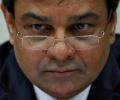
In his first comments after resigning as RBI governor on December 10 last year amid sharp differences with the government, Patel said banks indulged in over-lending, while the government did not "fully play" its role, and also conceded that the regulator should have acted earlier.

The minutes of the December MPC meet reveal members felt the current spike in the headline inflation rate was due to a temporary supply shock on the food front, expected to moderate by the second quarter of 2020-21.


Wall Street brokerage Bank of America Securities has pencilled in lower than the consensus retail inflation for the current fiscal year at 5 per cent, but higher than the previous forecast of 4.7 per cent. Stating that the June print will be critical for the future trajectory -- after the extremely high 6.3 per cent print in May, the brokerage in a report on Friday revised upwards its forecast by 30 bps to an yearly average of 5 per cent for the year to March 2022. "Though the June print will be critical for future trajectory, beyond near-term, we find some comfort from our analysis of four key factors that are likely to influence CPI inflation the most.

Is the worst over for Indian banks? The past two years saw them ride on treasury trades as deposits soared and credit growth dipped sharply. Gross and net non-performing assets (NPAs) moved south, and the provision coverage ratio (PCR), capital buffers, and profitability indicators are back at pre-pandemic levels. So, what's the plot ahead?

'Internet, healthcare and life insurance are a few sectors which offer solid long-term decadal potential.'

Amid uncertainties arising out of the second wave of COVID-19, the Reserve Bank on Thursday said that a durable revival of private consumption and investment would be critical for sustaining economic growth post-pandemic. Observing that 2020-21 has left a scar on the economy, RBI in its annual report said, "in the midst of the second wave as 2021-22 commences, pervasive despair is being lifted by cautious optimism built up by vaccination drives." The second wave of the pandemic has prompted revision of growth projections for the current fiscal and the consensus appears to be gravitating towards RBI's forecast of 10.5 per cent, the report added.

Facing the twin task of fighting the coronavirus pandemic today and building a better tomorrow, the world is experiencing a new Bretton Woods moment, IMF managing director Kristalina Georgieva said

SBI was the top gainer in the Sensex pack, rallying over 10 per cent, followed by Kotak Bank, Dr Reddy's, UltraTech Cement, ITC and HDFC Bank. On the other hand, Axis Bank, Bharti Airtel, ICICI Bank, Maruti and HCL Tech were among the laggards.

Many in the US establishment must hope that the crisis would put the brakes on China's growing military might. Well, it ain't gonna happen, says T T Ram Mohan, who was appointed a member of the prime minister's economic advisory council on Wednesday, October 28, 2021.

The department of economic affairs, in its Monthly Economic Review for September, said critical reforms undertaken by the government will put India to a strong and sustainable growth path in the long run.

Market participants are hoping for a few tweaks on the taxation front which will encourage consumers and businesses to spend.

The bank saw loans worth Rs 7,000 crore (Rs 70 billion) slipping into NPAs during the March quarter, taking the gross NPA ratio to 5.82 per cent.

The scrip was the worst hit among the front-line companies on both the indices during the day.

'Rate cut should reiterate RBI's commitment in providing confidence to consumers and small business.'

Industry staring at a record surplus by next year

Like everything else, the structure of banks may change, and banks may depend more on digital technologies and artificial intelligence for dealing with both their customers and employees.

Getting the balance between fiscal restraint and growth-contracting policy remains a problem.

Reserve Bank of India Governor Shaktikanta Das on Friday said the central bank will ensure adequate liquidity in the system to ease the financial stress caused by the Covid-19 pandemic. The central bank reduced the reverse repo rate -- the rate at which banks park their fund with the central bank -- by 25 basis points to 3.75 per cent.

Jaitley said the government had earmarked Rs 25,000 crore (Rs 250 billion) for recapitalisation.
'India has the potential to reduce its trade deficit with China by $8.4 billion in FY21.'
Public resources are scarce and need to be used well.

Thanks to the recapitalisation by the government and measures taken by the central bank, collapse of any large housing finance company won't pose as big a risk as it had six months ago.

Report points out corporate vulnerability indicators remain elevated.

Money is being released and the government knows it will have to front-run private investment.

Europe's discordant leaders snatched a deal on Monday that might just avert Greece's euro exit, but global investors' faith in the durability of the single currency has been tested yet again.

Shaktikanta Das said in Washington, DC, that there was nothing sacrosanct about the 25 bps rate cut and that monetary policy could be well served by calibrating the size of the policy rate to the dynamics of the situation, and the size of the change itself could convey the stance of policy.

As for structural reform, there are signs if one looks hard enough.

South and South-West Asia could witness an economic growth of 5.3 per cent in 2015, which will be a four-year high.
Aditya Puri thinks the government is on track.

We are entering a period of turbulence, but you can profit off that volatility.
The financial crisis has challenged the intellectual assumptions on which previous regulatory approaches were largely built, and in particular the theory of rational and self-correcting markets.

Several states that imposed prohibition in the past lifted it once revenue loss began to pinch
